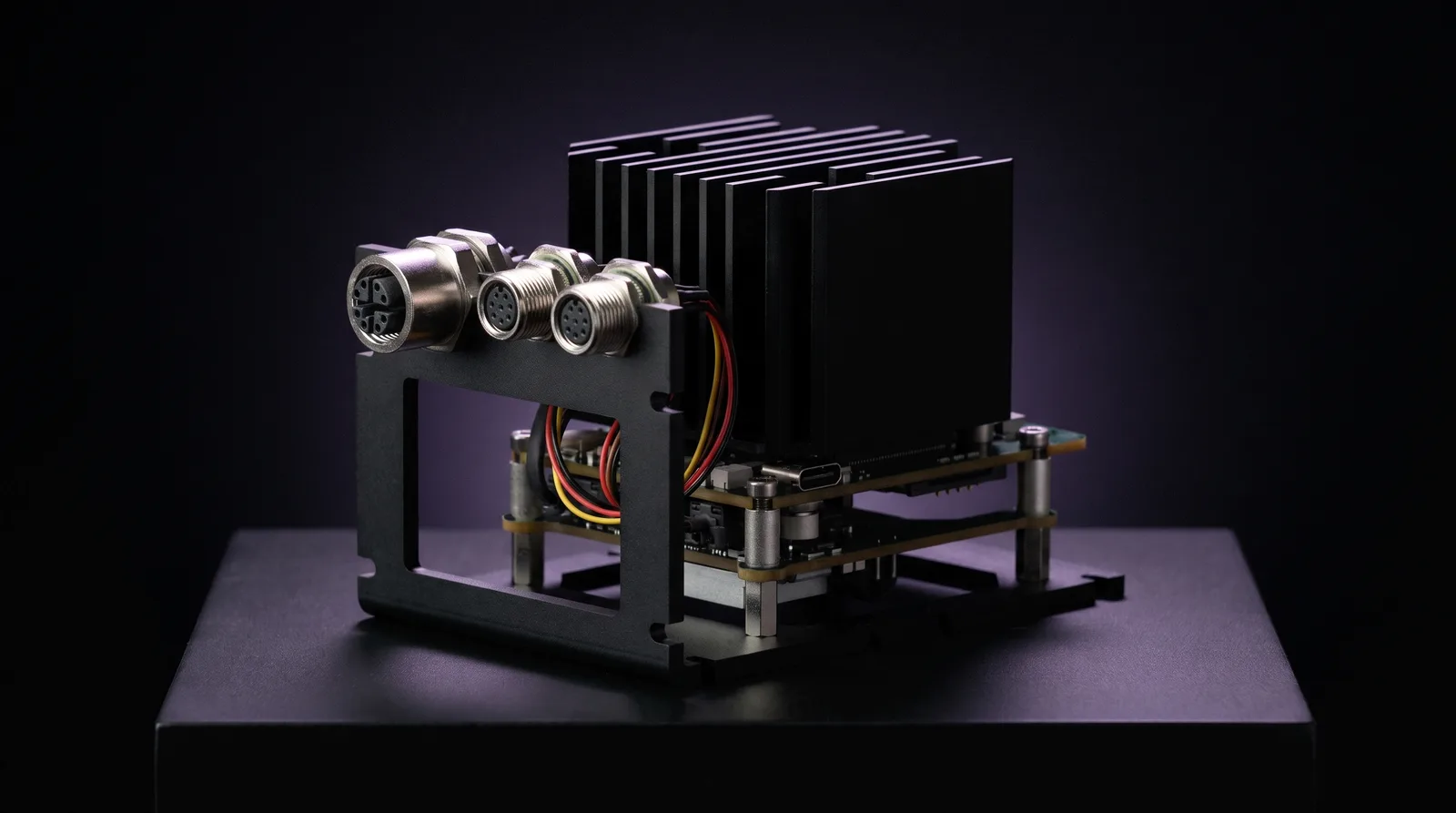
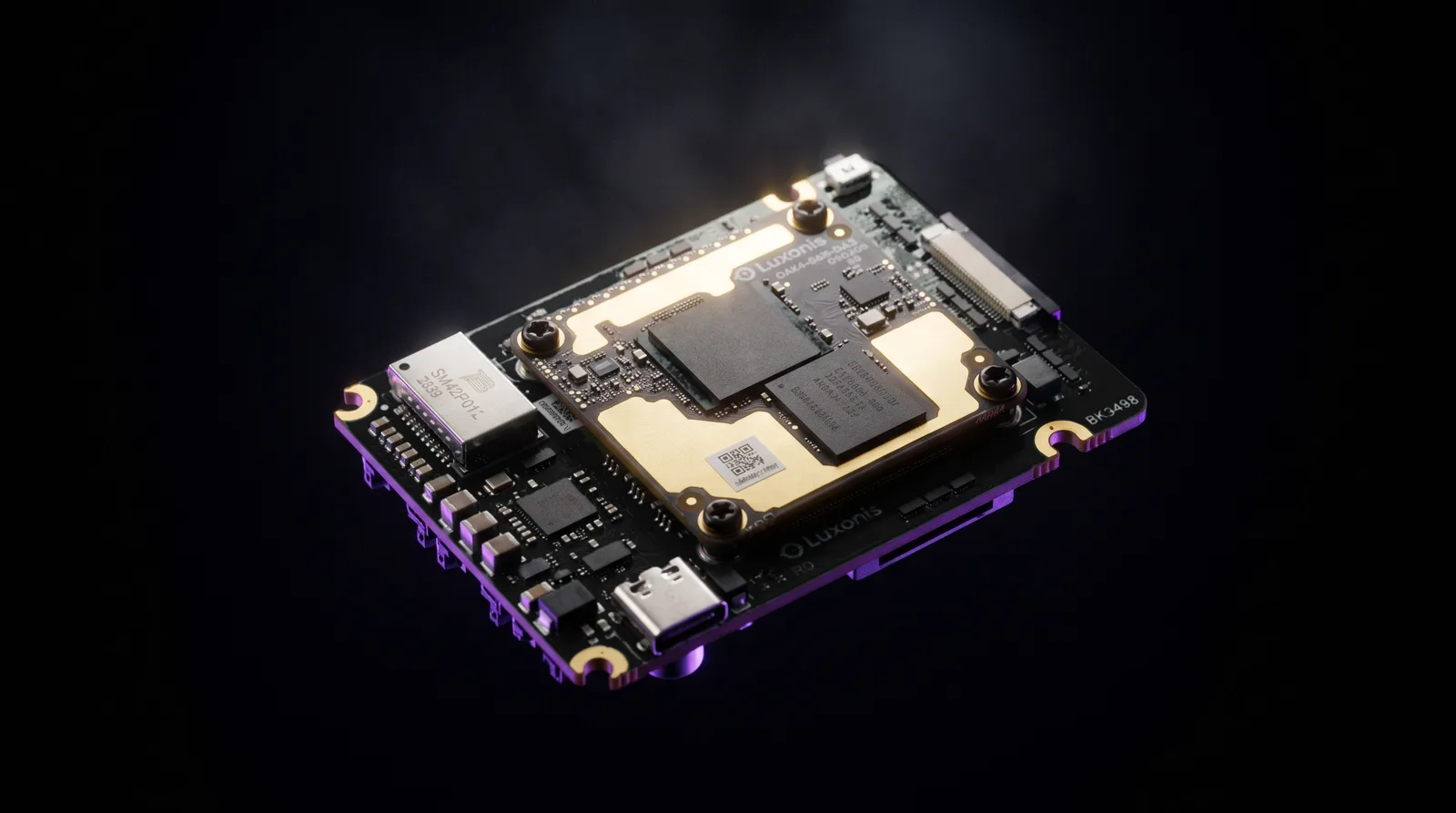
Your cameras, your layout
Five camera ports and 52 TOPS on one 70 x 53 mm board. Depth and AI, wherever your robot needs eyes.
5
Camera ports52
TOPS on board70 x 53
mm carrier36 g
Barebone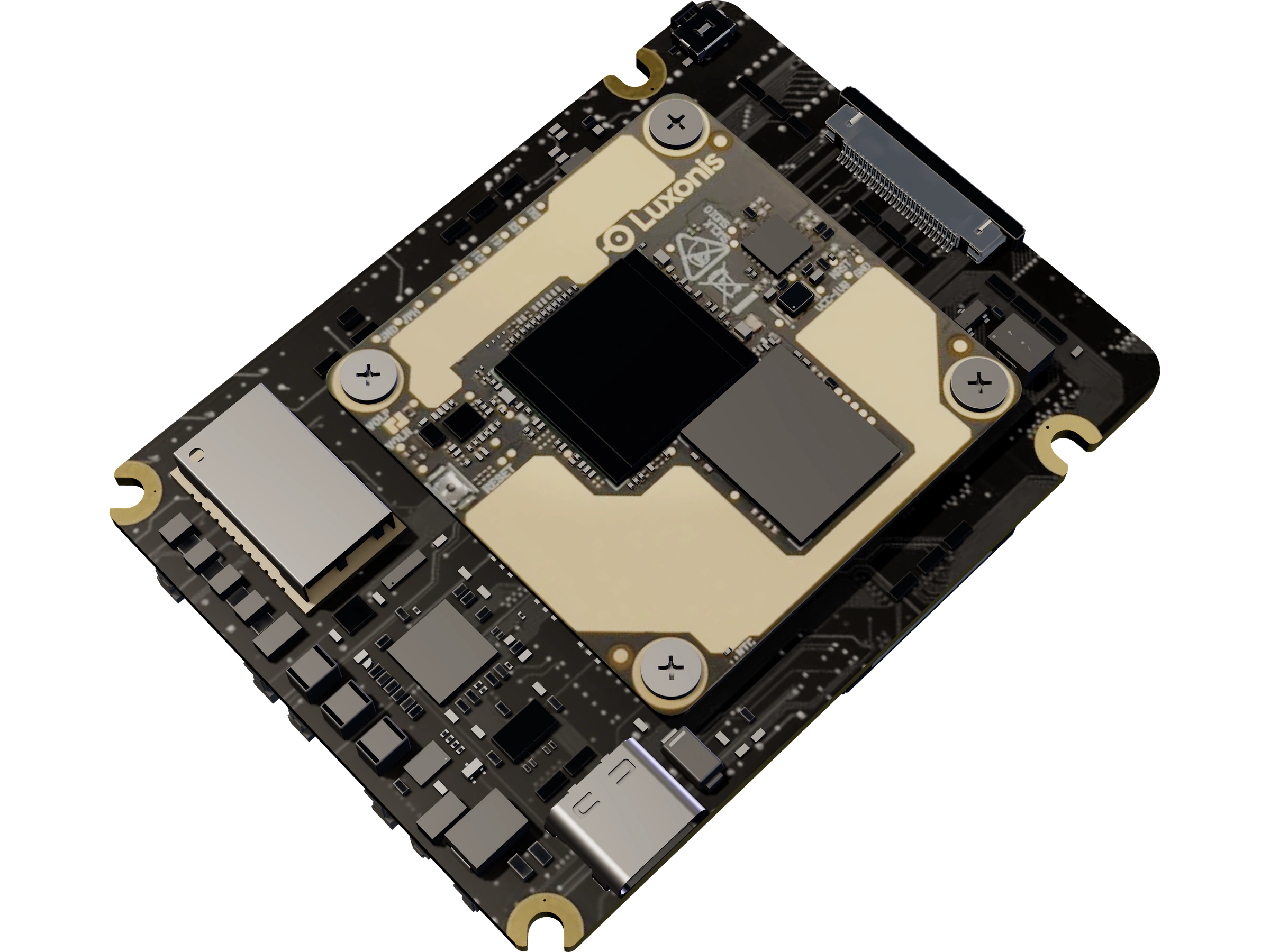

Five camera ports and 52 TOPS on one 70 x 53 mm board. Depth and AI, wherever your robot needs eyes.
A custom multi-camera robot usually takes five vendors and months of glue code. Here it is one board.
Compute module and carrier
Capture card or deserializer
Cameras from another vendor
Drivers you maintain
Your own sync and calibration
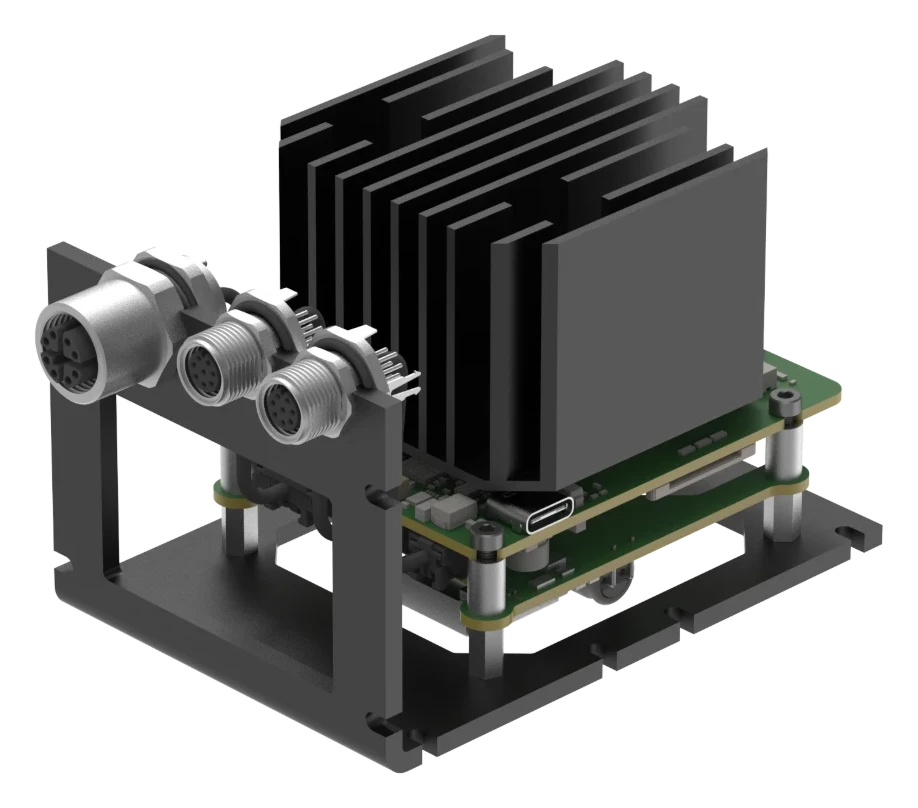
RVC4, 52 TOPS on board
Five direct MIPI ports
Calibrated camera modules
DepthAI and Luxonis OS
Synced, self-calibrating
8 GB / 128 GB
2.5 GbE / PoE+
USB-C / 5 Gbps
6-32 V DC
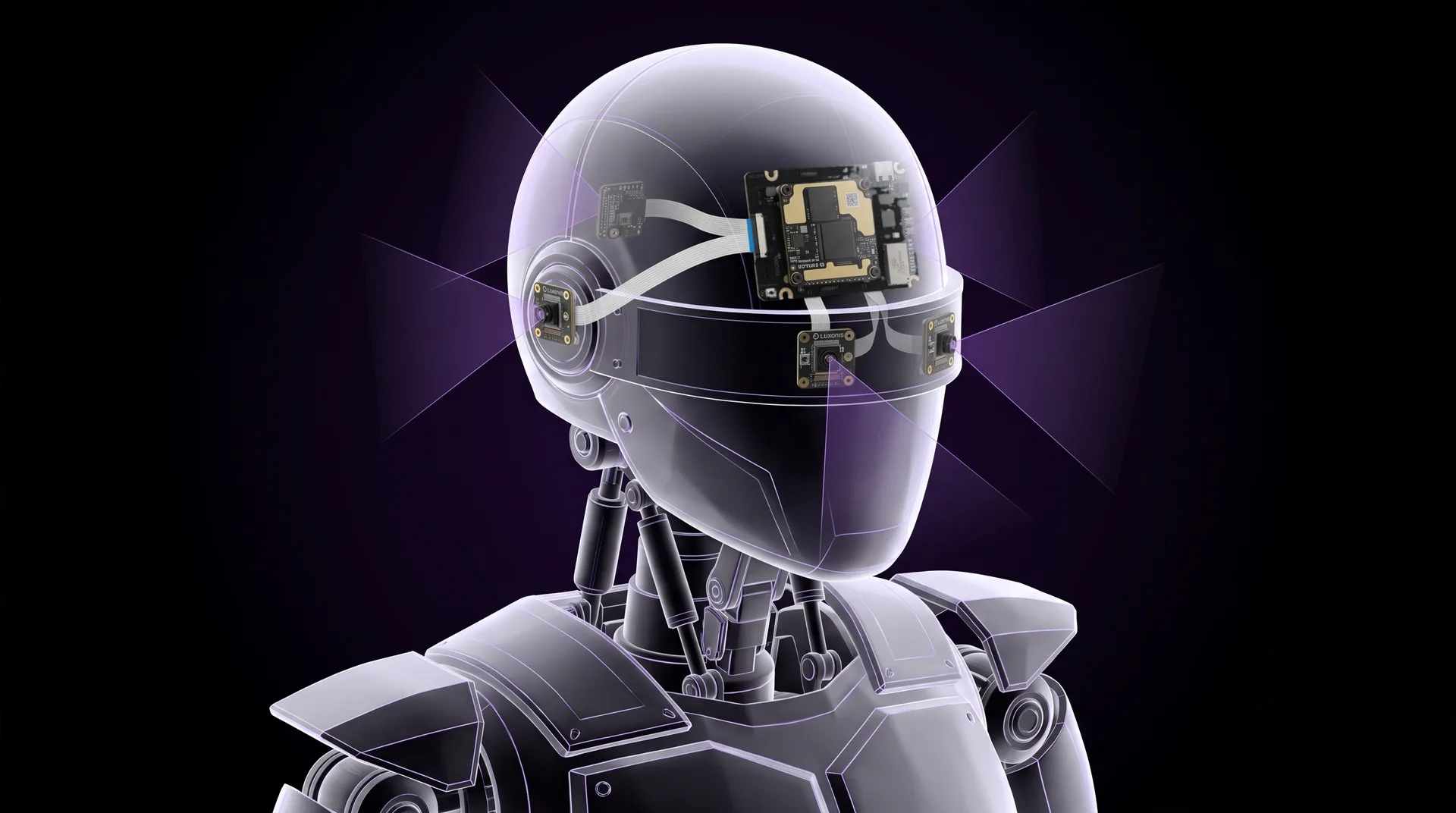
Stereo eyes plus side and rear views on one board inside the head, synced and calibrated.
Stereo at eye spacing
A pair behind the visor, at the baseline your hands need.
All-around awareness
Side and rear cameras on the same board, all synced.
Frees up the Jetson
Depth and detection run on the FFC, not your main GPU.
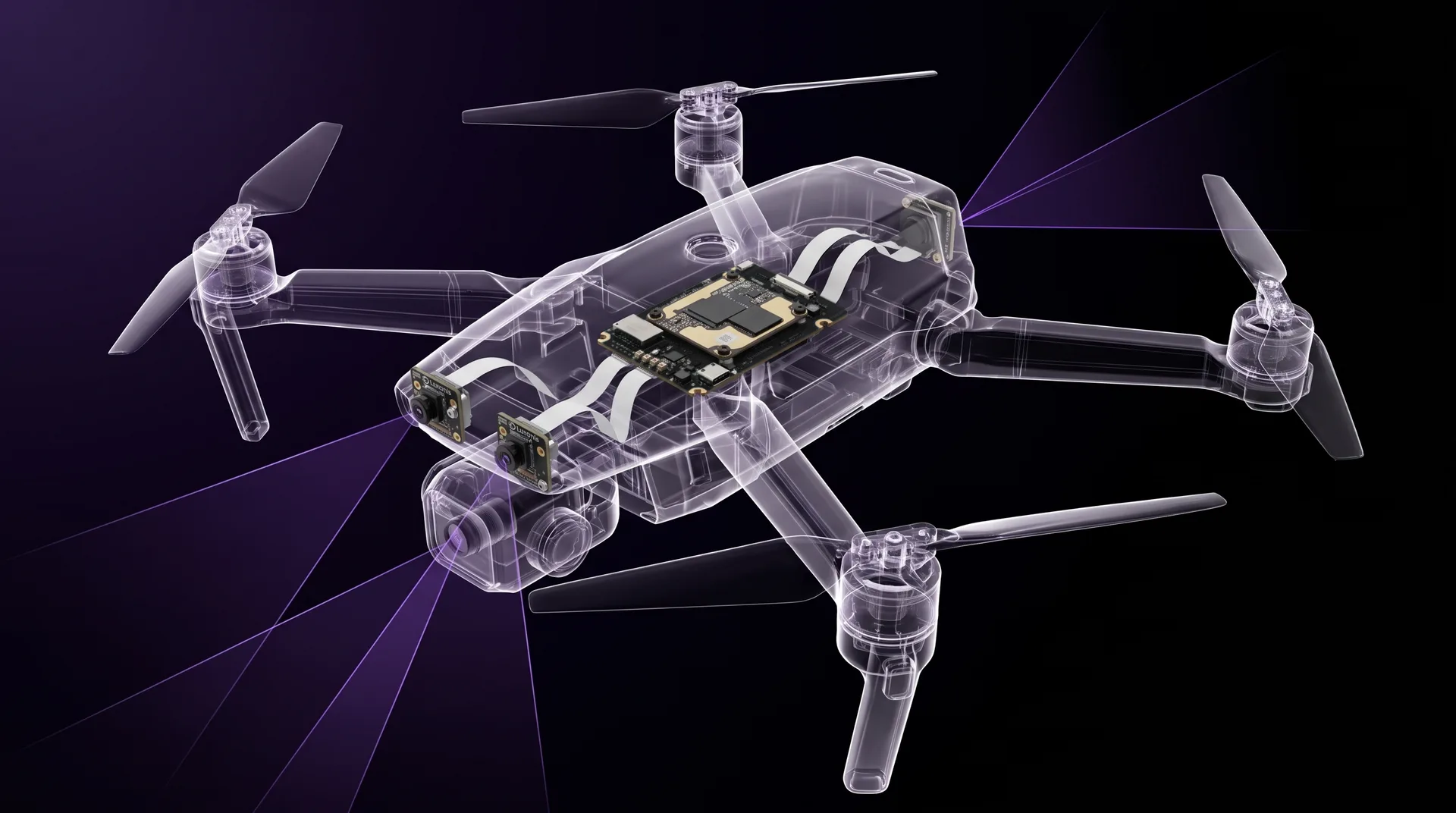
Companion computer, AI accelerator and cameras in one 36 g board on the flight battery.
One board, 36 g
52 TOPS, stereo depth and five camera ports.
Flight-ready I/O
6-32 V DC in. UART, CAN or Ethernet to the autopilot.
Thermal, coming Q1 2027
A thermal module beside your stereo pair for night and inspection flights.
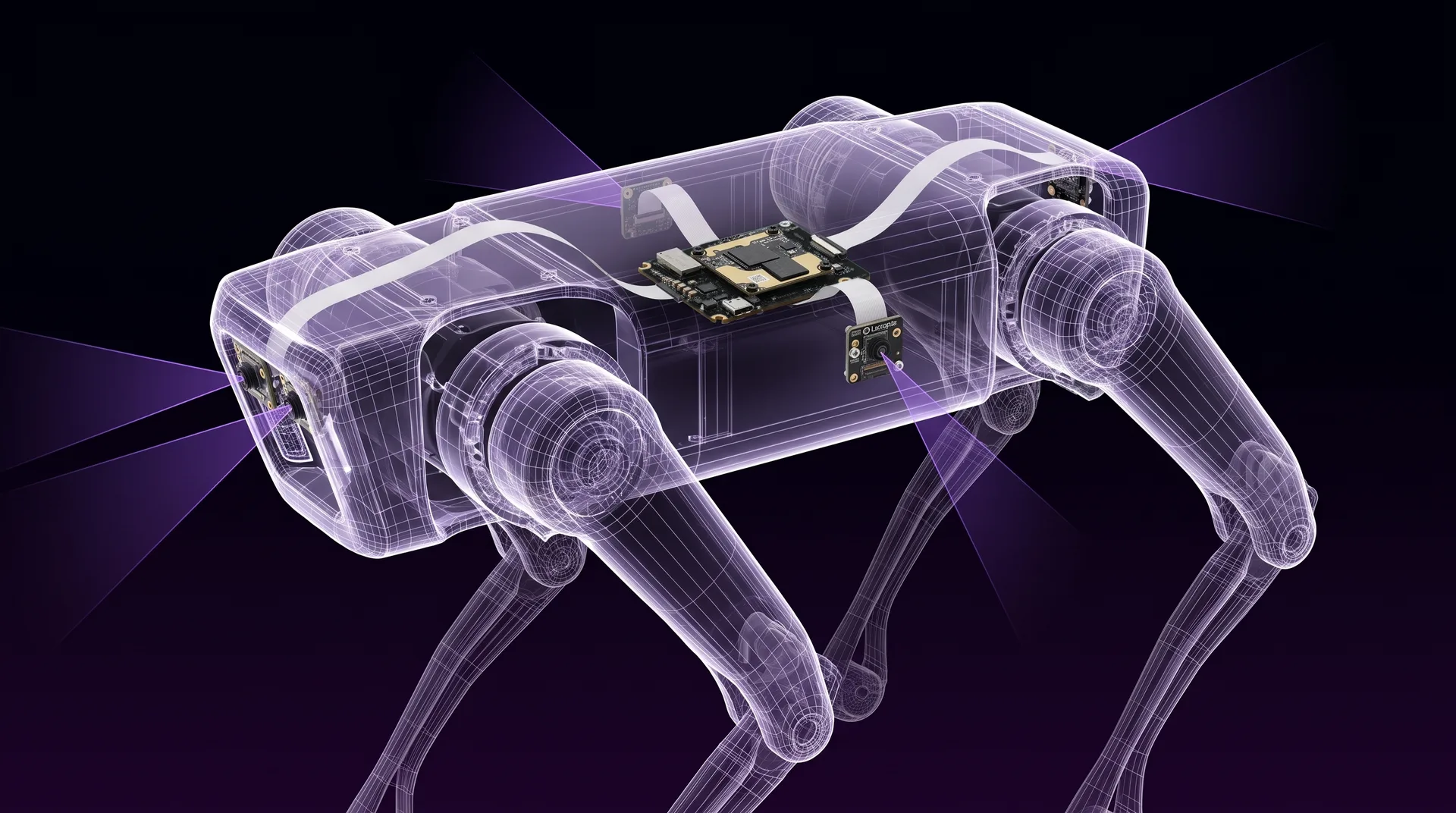
Forward depth, surround awareness and CAN to the body, with no host in the loop.
Terrain and obstacles
Forward stereo at the baseline your speed needs.
Surround view on board
Side and rear cameras stitched into a panorama or bird’s-eye view.
Speaks robot
CAN, 2.5 GbE with PoE+ and frame sync.
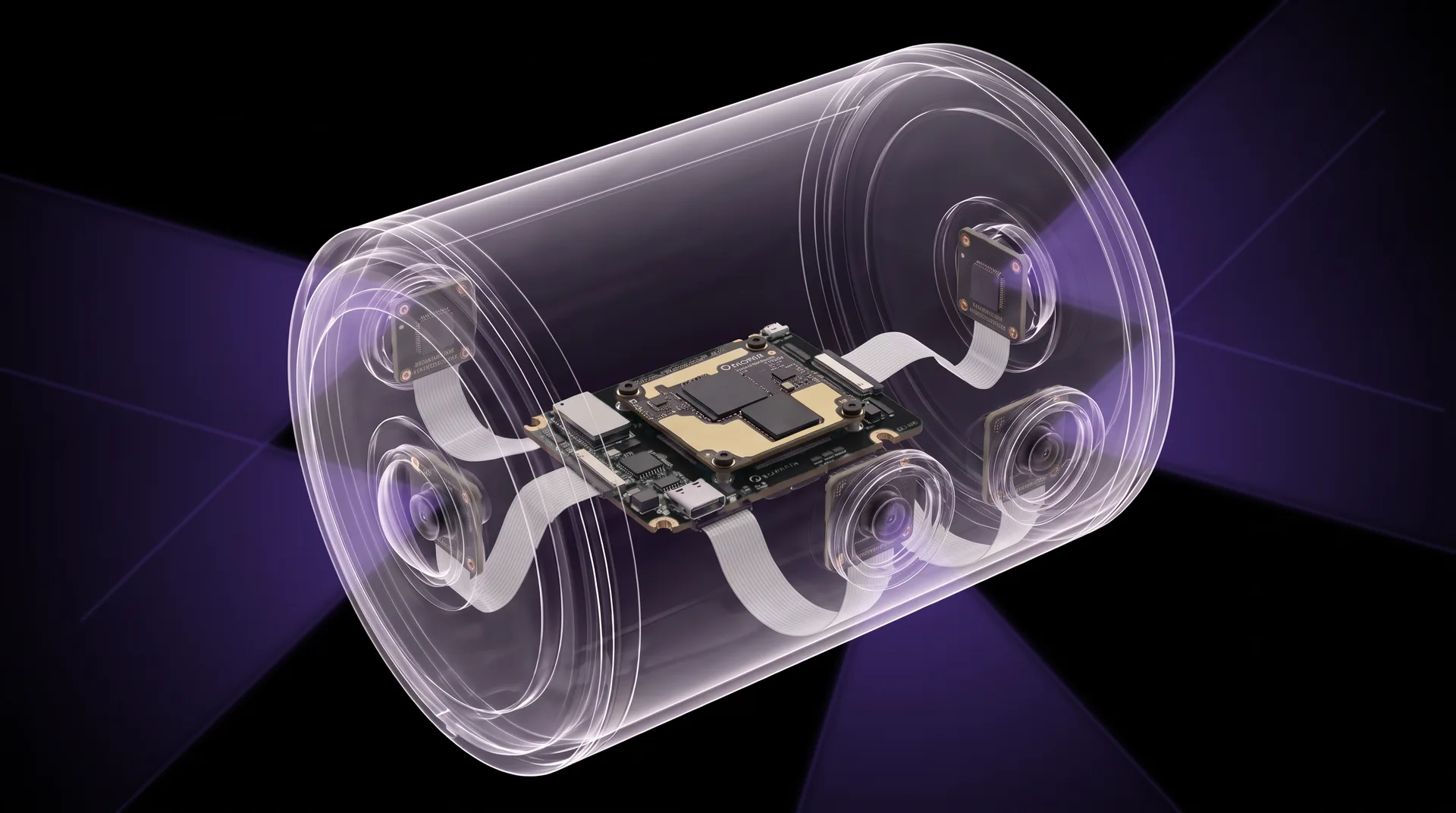
For 360° pods, underwater rigs and machine vision, where the enclosure comes first.
Cameras where you need them
Up to five modules on flex cables, each behind its own window.
Made to be sealed
Barebone with thermal pad, panel-mount connectors and STEP files.
Your own carrier, later
Start from the open reference design.
52 TOPS and a 6-core CPU on full Linux, on the board.
Runs your models and logic on simpler or stationary robots.
Sends depth, detections and tracks to a Jetson or other host.
Factory-calibrated camera modules, five ports, any layout.
Stereo eyes up front, a wide view on each side, one camera behind.
Contact Us
Coming Q1 2027
Every camera captures in sync, at the same instant, so stitching is one node in your pipeline.
Overlapping wide views, matched from image content. No calibration needed.

A top-down surround view, like a car’s parking display, projected from each camera’s calibration.
Capability | Before | With OAK 4 FFC |
|---|---|---|
Lens calibration | A checkerboard session per camera | Factory calibrated, stored on each module |
Camera placement | Targets laid out around the rig | Rough positions, refined from the scene |
Capture | Unsynced cameras that ghost at seams | All views captured in sync |
Stitching | Your own OpenCV on the host GPU | DepthAI Stitching node, on device |
Bandwidth | Five raw streams to the host | One stitched stream out |
Space the cameras for your robot. Modules arrive calibrated, and the rig aligns itself from whatever room it’s in.
A fixed depth camera gives you one baseline. Here you pick it: close for grippers, wide for drones.
Same carrier, SoM and software. Camera modules sold separately.
Start your own carrier board from ours.
View on GitHub
Don't know where to start? Check the docs for instructions and examples.
Read the Docs
Nothing new to learn.
Planning volume? Any volume from Q1 2027, when the Barebone ships.
Contact Sales
Compute module
OAK 4 SoM, based on RVC4
CPU and OS
6-core ARM CPU, Linux-based Luxonis OS
AI accelerator
48 TOPS INT8 / 12 TOPS FP16
GPU
4 TOPS FP16
Memory and storage
8 GB RAM, 128 GB onboard storage
Camera interface
5 × FFC connectors, 5 × MIPI CSI D-PHY, 4 lanes
Camera modules
OAK-FFC V2: IMX586, OG05, OV9282 (sold separately)
Processing
Stereo depth, filtering, RGB-depth alignment, feature tracking, neural-network inference
Calibration
Factory-calibrated module intrinsics; rig calibration with Dynamic Calibration
Ethernet
Up to 2.5 Gbps
USB-C
Up to 5 Gbps, host and device
Auxiliary I/O
Debug UART / GPIO, FSYNC / STROBE, USB 2.0 host, 5 V output
Expansion
SPI / I²C / UART, GPIO / I²S, CAN, SD card slot
Power input
6-32 V DC, USB-C PD (15 W min, 30 W recommended), PoE+ via PoE module
Motion sensors
6-axis gyroscope/accelerometer, 3-axis magnetometer
Carrier footprint
70 x 53 mm
Weight
36 g Barebone; 215 g Developer Kit
Mounting
4 × M3 mounting holes
Operating temperature
−20 °C to 50 °C with appropriate thermal management